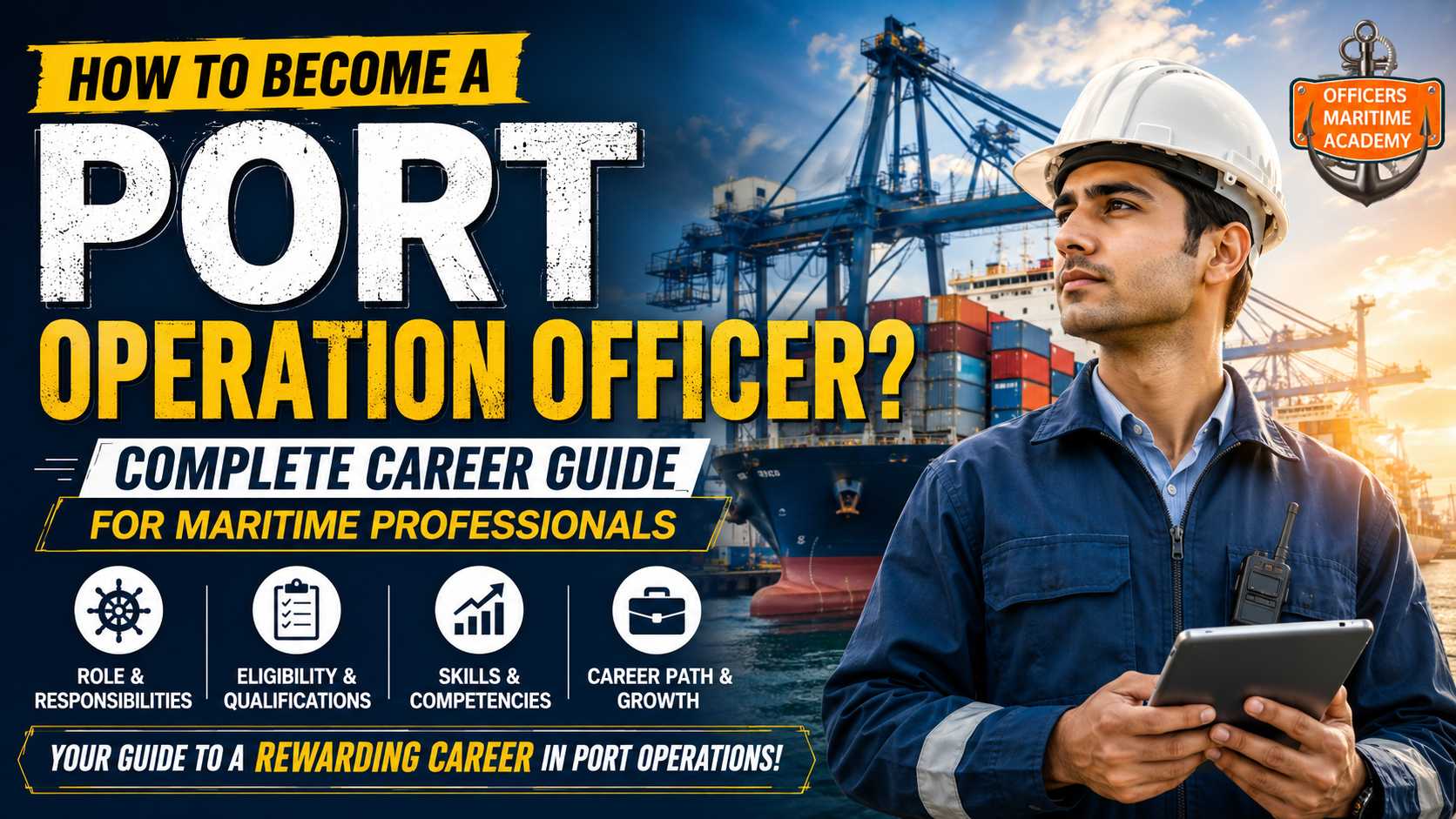
How to Become a Port Operation Officer? Complete Career Guide for Maritime Professionals
A Port Operation Officer plays a crucial role in managing and coordinating maritime activities at ports. If you’re wondering what a port operation officer does, they are responsible for overseeing ship operations, cargo handling, vessel scheduling, and ensuring smooth maritime logistics at port terminals.
Why Choose a Career as a Port Operation Officer in the Merchant Navy?
The shipping industry offers excellent growth opportunities. Becoming a port operations professional means securing a stable career with competitive salaries and international exposure. Key reasons to pursue this path include:
- Global career opportunities in maritime commerce and international shipping
- Attractive salary packages in the logistics and port management industry
- Career growth from officer positions to senior management roles
- Job security in the ever-growing shipping and cargo industry
Technical skill development in vessel operations and cargo management
What Qualifications Do You Need
Educational Requirements
Your foundation starts with the right maritime education. Here’s what you need:
| Qualification Level | Requirements | Duration | Relevance |
| 10+2 (School Level) | Science stream (Physics, Chemistry, Maths) | 12 years | Minimum entry requirement |
| Diploma in Maritime Studies | Port operations, shipping law, cargo handling | 2-3 years | Directly relevant |
| Bachelor’s Degree | Maritime Management / Port Operations / Merchant Navy | 3-4 years | Most preferred by employers |
| Advanced Certifications | STCW, Port Management, Logistics | 6-12 months | Career enhancement |
What Are the Step-by-Step Steps to Become a Port Operation Officer?
Step 1: Complete Your 10+2 Education
The first requirement for port operation officer training is completing your higher secondary education. Focus on science subjects as they form the foundation for maritime studies and vessel operations knowledge.
Step 2: Pursue Maritime Education and Shipping Management Courses
Enroll in a recognized maritime institute or merchant navy academy for formal training in port operations. Look for courses that cover:
- Shipping industry basics and maritime law
- Port terminal operations and cargo management
- Vessel documentation and maritime compliance
- Logistics management in shipping
- Safety standards (STCW regulations)
Step 3: Gain Practical Experience in Port Operations
Experience is critical in this field. Start with internships at major ports or shipping companies. This hands-on port operations experience helps you understand:
- Real-time cargo handling procedures
- Vessel management and scheduling
- Port safety protocols and maritime regulations
- Communication with shipping agents and freight handlers
Step 4: Obtain Required Maritime Certifications
Specific certifications make you job-ready:
- STCW Certificate (International maritime safety standard)
- Port Operations Certificate from recognized maritime authority
- Cargo Handling Certificate
- Maritime Safety Management Certificate
Step 5: Apply for Port Operation Officer Positions
With qualifications and experience, apply to:
- Shipping companies and vessel operators
- Port authorities and terminal operators
- Logistics and freight forwarding companies
- Maritime consulting firms
- International shipping lines
What Skills Do You Need to Succeed
Technical Skills Required
Success in port management requires specific maritime and logistics competencies:
- Vessel Operations Knowledge: Understanding ship types, cargo capacity, and maritime procedures
- Cargo Handling Expertise: Knowledge of different cargo types and loading procedures
- Port Management Systems: Proficiency with port operating software and digital maritime systems
- Maritime Regulations: Understanding SOLAS, MARPOL, and international shipping laws
- Inventory Management: Tracking cargo and port resources efficiently
Soft Skills for Port Operation Professional
Beyond technical knowledge, develop these essential abilities:
- Leadership and team management for coordinating port staff
- Communication skills for interacting with international teams
- Problem-solving abilities in handling operational challenges
- Attention to detail in documentation and compliance
- Stress management in fast-paced port environments
How Long Does It Take to Become a Port Operation Officer?
The timeline varies based on your educational path:
- Diploma route: 3-5 years (2-3 years diploma + 2 years experience)
- Bachelor’s degree route: 4-7 years (4 years degree + 3 years experience)
- Professional certification route: 2-4 years (with relevant background)
Most employers expect 2-3 years of actual port operations experience before promoting someone to officer-level positions.
What Is the Salary Range for Port Operation Officers?
Understanding earning potential is important for career planning:
Entry Level Port Operations Officer:
- Starting salary: ₹3,00,000 – ₹5,00,000 per annum
- Roles: Junior Port Officer, Operations Coordinator
Experienced
- Mid-level salary: ₹6,00,000 – ₹10,00,000 per annum
- Roles: Senior Port Officer, Terminal Manager
Senior Management (Port Operations Manager):
- Senior salary: ₹12,00,000 – ₹20,00,000+ per annum
- Roles: Port Manager, Operations Director
Note: Salaries vary based on port location, company size, and your maritime industry experience.
Which Merchant Navy Institutes Offer Port Operations Training?
- Indian Maritime University (IMU) – Port Management programs
- Tolani Maritime Academy – Shipping and Port Management
- Samudra Institute of Maritime Studies – Port Operations Certification
- ROrC Training Institute – Cargo Handling and Port Operations
National Maritime Foundation – Advanced port management courses
What Are Common Career Paths After Becoming a Port Operation Officer?
Your maritime career can progress in multiple directions:
Vertical Career Growth:
- Port Operation Officer → Senior Port Officer → Port Manager → Terminal Director
Lateral Movement:
- Port Operations → Shipping Operations → Maritime Logistics → Fleet Management
Specialization Options:
- Cargo Operations Specialist
- Port Safety and Compliance Manager
- Maritime Project Manager
- Logistics Consultant
What Challenges Do They Faces
Understanding the industry challenges helps you prepare:
- 24/7 operational demands requiring shift work and flexibility
- Weather-related delays affecting vessel scheduling
- Complex maritime regulations requiring constant updates
- International team coordination across different time zones
Safety and compliance pressure in port management
Your Path to Becoming a Successful Port Operation Officer
Becoming a port operation officer is an achievable goal for anyone passionate about the maritime industry and shipping operations. The path requires dedication to maritime education, practical experience in port terminals, and continuous skill development.
Start by completing your 10+2 in the science stream, pursue formal maritime training, gain hands-on experience in port operations, and obtain necessary certifications. With the growing demand for maritime professionals in global shipping and port management, your career as a port operations professional offers stability and growth.
The shipping and logistics industry needs skilled port operation professionals now more than ever. If you’re ready to take the first step toward this rewarding maritime career, begin your merchant navy training today.
Ready to Start Your Port Operations Career?
Contact our Merchant Navy Coach team for personalized guidance on port operation officer recruitment, maritime training programs, and shipping industry career planning. Your maritime career journey starts here.
For More Information
Visit Our Website – Merchant Navy Coach
Visit us at – Officers Maritime Academy In Dehradun
Frequently Asked Questions