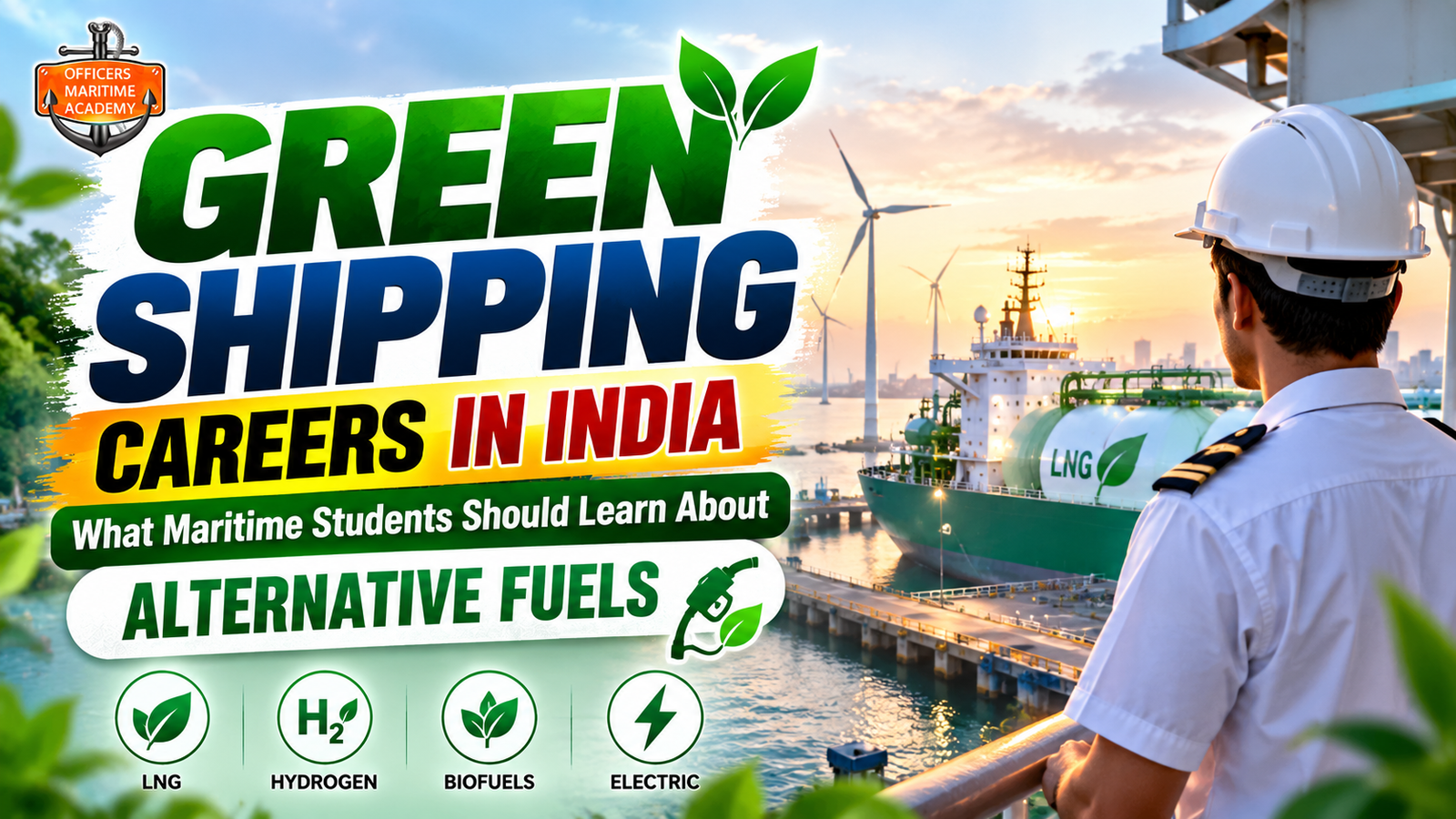
Green Shipping Careers in India: What Maritime Students Should Learn About Alternative Fuels
The maritime industry stands at a pivotal transformation point, and green shipping careers in India represent one of the most promising career paths for aspiring naval officers. As global maritime regulations tighten and environmental consciousness rises, India’s shipping sector is rapidly adopting sustainable practices that create unprecedented opportunities for maritime professionals.
India, with its extensive coastline and strategic position in global trade routes, is positioned to become a green shipping hub. The adoption of alternative fuels in commercial vessels isn’t just an environmental imperative—it’s reshaping how maritime careers evolve. Students pursuing B.Sc Nautical Science or Marine Engineering courses need to understand these transformative trends to remain competitive in the evolving maritime job market.
According to the International Maritime Organization (IMO), the shipping industry accounts for approximately 3% of global greenhouse gas emissions. Green shipping careers in India are emerging as solutions to this challenge, with major Indian shipping companies investing heavily in sustainable vessel technology.
What Is Green Shipping and Why Does It Matter?
Green shipping refers to maritime practices that minimize environmental impact through technological innovation, operational efficiency, and sustainable fuel adoption. It encompasses everything from hull design optimization to implementing alternative fuel propulsion systems.
Green shipping careers in India matter for several critical reasons:
Environmental Impact: Commercial vessels produce significant carbon emissions. Transitioning to green shipping technologies directly reduces atmospheric pollution and ocean acidification.
Regulatory Compliance: The IMO’s 2030 and 2050 carbon reduction targets mandate that the shipping industry reduce emissions by 30% by 2030 and achieve net-zero by 2050.
Economic Opportunities: Companies adopting green technologies gain competitive advantages through reduced fuel costs and improved operational efficiency.
Career Growth: As shipping companies modernize their fleets, demand for skilled professionals in green shipping careers in India continues to accelerate exponentially.
The Indian Ministry of Shipping has launched initiatives to support sustainable maritime practices, creating a favorable environment for young professionals entering these specialized fields.
Major Alternative Fuels Used in the Shipping Industry
The transition toward green shipping careers in India involves understanding the primary alternative fuels revolutionizing vessel propulsion:
Liquefied Natural Gas (LNG)
LNG represents the most widely adopted alternative fuel currently. It reduces CO2 emissions by approximately 21% compared to conventional marine fuel oil.
Methanol
Methanol-powered vessels show promise with emission reductions of 15-25%. The fuel is renewable and can be produced from various sources, including biomass and waste.
Ammonia
Zero-carbon ammonia propulsion is considered the “future fuel” for green shipping careers in India, with no CO2 or SOx emissions during combustion.
Hydrogen
Green hydrogen, produced through renewable energy, offers the cleanest shipping solution with water as the only emission byproduct.
Biofuels
Sustainable biofuels derived from organic matter support the circular economy within maritime operations.
These alternatives form the technological backbone that maritime students must understand to pursue green shipping careers in India successfully.
LNG, Methanol, Ammonia and Hydrogen: Key Differences
| Criteria |
LNG |
Methanol |
Ammonia |
Hydrogen |
| CO2 Reduction |
21% |
15-25% |
100% |
100% |
| Current Adoption |
High |
Medium |
Low |
Emerging |
| Infrastructure |
Established |
Developing |
Limited |
Minimal |
| Safety Challenges |
Cryogenic storage |
Corrosive properties |
Toxic fumes |
Flammability |
| Production Cost |
Moderate |
Low-Moderate |
Moderate-High |
High |
| Maritime Jobs |
Abundant |
Growing |
Emerging |
Future-focused |
| Certification Required |
Type G Tanker |
Basic Safety |
Advanced Hazmat |
Research-level |
Understanding these distinctions is essential for maritime students considering green shipping careers in India, as each fuel type demands specific technical expertise and operational knowledge.
How Alternative Fuels Are Changing Merchant Navy Careers
Green shipping careers in India are fundamentally transforming traditional maritime roles:
Deck Officers now require expertise in operating alternative fuel systems, understanding complex fuel management protocols, and maintaining advanced propulsion technologies.
Marine Engineers must master new engine designs, fuel injection systems, and emission control equipment specific to LNG, methanol, and ammonia-fueled vessels.
Electricians and Technical Officers (ETO professionals from ETO Course) face increasing demand due to the electrical complexity of modern green vessels.
The traditional hierarchical career progression—from cadet to captain—remains, but the technical requirements have evolved dramatically. Maritime students pursuing green shipping careers in India must develop a hybrid skill set combining classical nautical knowledge with modern environmental technology expertise.
Companies like Great Eastern Shipping and Anglo-Eastern (mentioned in successful placements at Officer Maritime Academy) are actively recruiting officers trained in green shipping technologies.
Skills Maritime Students Need for Green Shipping Jobs
To excel in green shipping careers in India, maritime students should develop these competencies:
Technical Skills:
- Alternative fuel system operation and maintenance
- Advanced propulsion technology understanding
- Digital ship management systems
- Environmental monitoring equipment operation
- Energy efficiency optimization
Regulatory Knowledge:
- IMO regulations and compliance procedures
- Environmental protection protocols
- Hazardous material handling (for specific fuels)
- Carbon accounting and emission reporting
Soft Skills:
- Cross-functional team collaboration
- Data analysis and interpretation
- Environmental awareness and sustainability mindset
- Continuous learning commitment
Students enrolled in IMU-CET coaching or DNS Sponsorship Programmes should specifically request training modules covering these green shipping competencies.
Role of Marine Engineers in Green Shipping Technology
Marine engineers are at the forefront of green shipping careers in India. Their responsibilities have expanded significantly:
Traditional Responsibilities:
- Engine operation and maintenance
- Fuel management
- Mechanical system repairs
Modern Green Shipping Responsibilities:
- LNG fuel system management and safety protocols
- Alternative fuel combustion monitoring
- Advanced emission control system operation
- Fuel consumption optimization and carbon footprint reduction
- Compliance with advanced environmental documentation
Professionals pursuing Marine Engineering or GME Course programs should prioritize understanding new propulsion technologies. These specialized engineers command premium salaries—approximately 30-50% higher than conventional marine engineers—reflecting the specialized nature of green shipping careers in India.
Green Shipping Regulations and IMO Decarbonisation Targets
The International Maritime Organization’s regulatory framework is driving green shipping careers in India:
Key IMO Regulations Affecting Green Shipping Careers in India:
- MARPOL Annex VI: Restricts air pollution from ships, mandating reduced sulfur and nitrogen oxide emissions
- Energy Efficiency Design Index (EEDI): Establishes minimum efficiency requirements for new vessels
- Ship Energy Efficiency Management Plan (SEEMP): Requires operational efficiency improvements
- Carbon Intensity Indicator (CII): New regulation (effective 2024) mandates carbon intensity ratings for vessels
These regulations create opportunities for maritime professionals who understand compliance requirements. The IMO’s 2050 goal of achieving net-zero emissions by 2050 (with a 50% interim target by 2030) ensures sustained demand for green shipping careers in India through the coming decades.
Career Opportunities in Sustainable Maritime Operations
Green shipping careers in India manifest across multiple maritime sectors:
Ocean-Going Vessels: Officers managing LNG carriers, methanol tankers, and hybrid-powered cargo ships face exceptional career growth opportunities.
Shipping Company Management: Corporate roles focusing on fleet decarbonization strategies, sustainability reporting, and green certification management.
Port Operations: Positions involving alternative fuel bunkering infrastructure, emission monitoring, and port-based sustainability initiatives.
Classification Societies: Organizations like DNV and Lloyd’s Register employ marine professionals to certify alternative fuel systems.
Research and Development: University positions and corporate R&D roles for innovation in green shipping technologies.
Environmental Compliance: Specialist positions dedicated to regulatory adherence and carbon accounting.
For aspiring officers, securing positions with companies like Maersk Line, which operates over 100 LNG-powered vessels (the world’s largest fleet of such ships), represents the pinnacle of green shipping careers in India.
How Indian Maritime Students Can Prepare for Green Shipping Careers
Strategic preparation for green shipping careers in India requires:
1. Formal Maritime Education: Enroll in accredited programs such as B.Sc Nautical Science or B.Tech Marine Engineering, ensuring the institution includes green technology modules.
2. Specialized Coaching: Participate in IMU-CET & Sponsorship Coaching programs that incorporate green shipping content. Officers Maritime Academy in Dehradun provides comprehensive coverage of modern maritime practices.
3. Sponsorship Pursuit: Target companies investing heavily in green fleets. Organizations like Maersk, Anglo-Eastern, and Fleet Ship Management actively sponsor cadets interested in green shipping careers in India.
4. Continuous Learning: Stay updated with:
- IMO regulation changes
- Alternative fuel technology developments
- Environmental sustainability trends
- Manufacturer specifications for green propulsion systems
5. Digital Competency: Develop proficiency with vessel management software, energy monitoring systems, and data analytics tools increasingly integral to green shipping careers in India.
Future Scope of Green Shipping in India
The future trajectory of green shipping careers in India appears exceptionally promising:
Market Projections:
- By 2030, alternative fuel-powered vessels are expected to comprise 15-20% of global fleet capacity
- India’s shipping industry is projected to expand by 8-10% annually through 2030
- Green shipping careers in India will see 40-50% salary growth over the next five years
Technological Evolution:
- Ammonia and hydrogen propulsion will transition from experimental to commercial systems
- Battery-electric vessels will emerge for short-haul maritime routes
- Advanced automation systems will create demand for specialized technical officers
Policy Support: The Indian government’s National Maritime Development Programme emphasizes sustainable shipping, ensuring regulatory tailwinds for green shipping careers in India.
Global Shipping Industry Transition: With approximately 90,000 commercial vessels operating globally, the fleet renewal cycle ensures consistent demand for officers trained in green shipping technologies through 2050.
Conclusion
Green shipping careers in India represent far more than an environmental trend—they constitute the future of maritime professions. The convergence of stringent global regulations, technological innovation, and economic opportunities creates an ideal environment for maritime students to build rewarding careers in sustainable shipping.
The transformation from traditional to green shipping is inevitable and accelerating. Students who equip themselves with knowledge of alternative fuels, modern propulsion systems, and environmental compliance will command premium positions at leading shipping companies.
Institutions like Officers Maritime Academy (located in Dehradun, offering DGS-approved courses) recognize this shift and have integrated green shipping knowledge into their curriculum. Maritime students serious about high-earning, future-proof careers should prioritize education that includes contemporary green shipping technologies.
The question isn’t whether green shipping careers in India will flourish—they will. The question is whether you’ll be prepared to seize these extraordinary opportunities.
Frequently Asked Questions