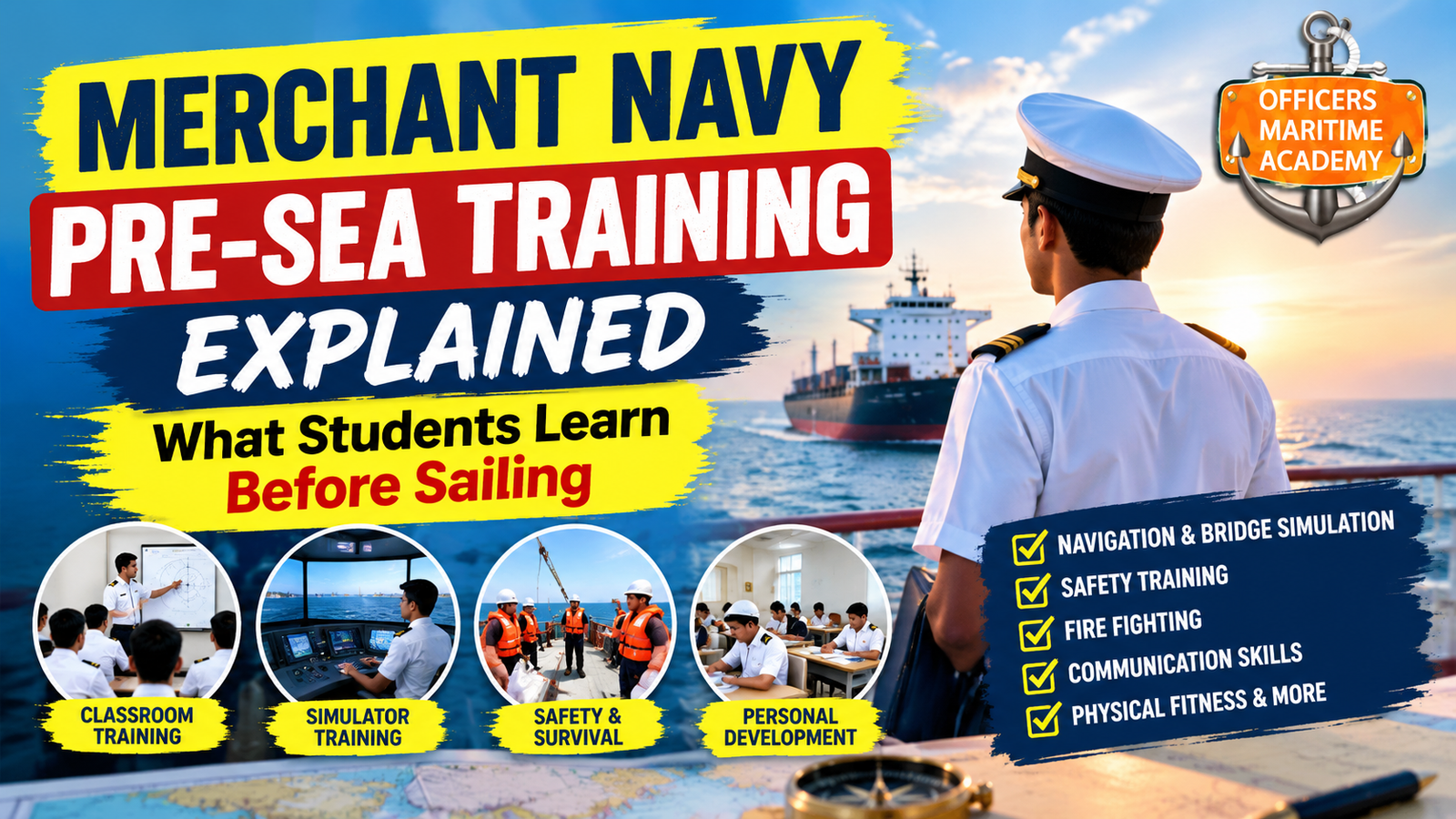
Merchant Navy Pre-Sea Training Explained: What Students Learn Before Sailing
The maritime industry demands highly trained professionals who understand the complexities of ocean navigation and vessel operations. Merchant Navy Pre-Sea Training Explained is the foundational step that transforms aspiring seafarers into competent deck and engine officers. This comprehensive guide explores everything you need to know about pre-sea training, from eligibility requirements to the practical skills developed before stepping aboard your first vessel.
What Is Pre-Sea Training in the Merchant Navy?
Merchant Navy Pre-Sea Training Explained as a systematic program designed to equip maritime graduates with practical seamanship skills, safety knowledge, and professional competencies required in the shipping industry. Unlike theoretical classroom education, pre-sea training combines hands-on demonstrations with simulated maritime environments to prepare candidates for real-world challenges at sea.
Pre-sea training serves as the critical bridge between academic learning and professional maritime work. Candidates undergo intensive instruction in vessel operation, safety protocols, and emergency response procedures at certified maritime training institutes. This training is internationally recognized and complies with STCW (Standards of Training, Certification, and Watchkeeping) conventions established by the International Maritime Organization (IMO).
Why Is Pre-Sea Training Important for Future Seafarers?
The importance of pre-sea training cannot be overstated in maritime education. Here’s why this training is essential:
Safety and Risk Management: Maritime operations involve inherent risks. Pre-sea training instills critical safety awareness and emergency response capabilities that protect lives and vessels.
Professional Competency: Shipping companies hire officers based on their practical skills. Pre-sea training demonstrates that candidates possess industry-required competencies, making them attractive to employers.
International Standards Compliance: STCW certifications obtained during pre-sea training are recognized worldwide, enabling officers to work on international vessels and in global maritime commerce.
Confidence Building: Hands-on training builds confidence in candidates, preparing them psychologically and technically for life at sea, which involves extended periods away from family and familiar environments.
Who Needs to Complete Pre-Sea Training?
Pre-sea training is mandatory for anyone pursuing a professional maritime career. This includes:
- Aspiring Deck Officers (3rd Officer, 2nd Officer, Chief Officer)
- Future Marine Engineers (4th Engineer, 3rd Engineer, 2nd Engineer)
- Cargo Officers managing ship operations
- Specialized Maritime Professionals in various vessel types
- Graduates of approved maritime diploma programs seeking officer certifications
Both Indian maritime graduates and international candidates must complete pre-sea training before joining commercial vessels. The training is non-negotiable for accessing shipping company recruitment processes.
Eligibility Requirements for Merchant Navy Pre-Sea Courses
Before enrolling in Merchant Navy Pre-Sea Training, candidates must meet specific requirements:
Academic Qualifications
- Minimum 10+2 pass or equivalent qualification
- Alternatively, a 2-year maritime diploma from a recognized institution
- For specialized roles, bachelor’s degrees in relevant disciplines may be required
Age Requirements
- Minimum age: 16-17 years (varies by maritime institute)
- Maximum age: Generally 24-25 years for first-time applicants
- Some institutes offer late entries up to 28-30 years
Physical Fitness Standards
- Height: Minimum 157 cm for deck cadets (slightly flexible)
- Vision: Correctable to 6/6 in both eyes
- Overall health: Must pass maritime medical examination
- No chronic medical conditions affecting sea service capability
Nationality and Documentation
- Valid passport with minimum 10-year validity
- Aadhar card and other government-issued identification
- Character certificate from educational institution
- Medical fitness certificate from approved maritime doctors
What Students Learn During Pre-Sea Training
Basic Seamanship and Shipboard Operations
Merchant Navy Pre-Sea Training Explained includes comprehensive seamanship instruction covering:
- Ship terminology and anatomy: Understanding vessel structure, compartments, and equipment
- Rigging and rope work: Practical skills in knot-tying and rope handling
- Navigation basics: Chart reading, compass operation, and positional awareness
- Vessel maneuvering: Steering principles, anchor operations, and berthing procedures
- Ship handling techniques: Understanding vessel dynamics and motion characteristics
Students spend considerable time on training ships and in simulator rooms, practicing these essential skills repeatedly until they achieve proficiency.
Maritime Safety Procedures
Safety is paramount in maritime training. Students learn:
- Collision avoidance protocols: COLREGS (International Regulations for Preventing Collisions at Sea)
- Weather assessment: Understanding meteorological data and storm prediction
- Ship stability: Loading calculations and cargo arrangement principles
- Environmental protection: Pollution prevention and ballast water management
- Security procedures: Anti-piracy measures and port security regulations
Fire Prevention and Firefighting
Fire at sea is catastrophic. Pre-sea training emphasizes:
- Fire detection systems: Understanding alarm systems and fire locating procedures
- Firefighting techniques: Using water, foam, and dry powder extinguishers effectively
- Emergency evacuation: Proper muster procedures and lifeboat operations
- Equipment maintenance: Fire equipment inspection and certification
- Scenario-based drills: Repeated practice of fire emergency responses
Personal Survival Techniques
Life in maritime environments requires survival proficiency:
- Lifeboat operation: Launching, rowing, and rescue procedures
- Life jacket usage: Proper donning and maintenance
- Water survival: Swimming techniques specific to maritime emergencies
- Hypothermia prevention: Understanding cold water survival principles
- Rescue coordination: Communication and signaling in distress situations
First Aid and Medical Emergency Response
Maritime medical response is often delayed. Training covers:
- Basic life support (BLS): CPR and advanced cardiac care fundamentals
- Wound management: Treating injuries with limited medical resources
- Maritime-specific ailments: Understanding seasickness, decompression injuries, and heat stress
- Telemedicine basics: Communication with land-based medical advisors
- Emergency medication administration: Safe and effective use of shipboard medicine
Personal Safety and Social Responsibilities
Living and working at sea requires unique personal and interpersonal skills:
- Stress management: Coping with isolation and extended sea voyages
- Team coordination: Working effectively with diverse multinational crews
- Substance abuse awareness: Understanding maritime regulations on alcohol and drugs
- Cultural sensitivity: Respecting diverse backgrounds in international maritime environments
- Fatigue management: Understanding working hour regulations (STCW Hour regulations)
STCW Training and Its Role in Pre-Sea Preparation
The International Maritime Organization’s STCW Convention sets international standards for maritime training. Merchant Navy Pre-Sea Training incorporates STCW-mandated competencies:
Key STCW Certifications During Pre-Sea Training
| Certification |
Duration |
Purpose |
Validity |
| Basic Safety Training |
5 days |
Foundation maritime safety knowledge |
5 years |
| Advanced Firefighting |
5 days |
Professional fire response capability |
5 years |
| Proficiency in Survival Craft |
3-5 days |
Lifeboat operation competency |
5 years |
| First Aid and Medical Care |
3 days |
Emergency medical response |
2-3 years |
| STCW Tanker Endorsement |
5 days |
Specialized tanker operations (if applicable) |
5 years |
| Bridge Resource Management |
3 days |
Deck department coordination |
5 years |
| Engine Resource Management |
3 days |
Engine department coordination |
5 years |
These certifications are internationally recognized and required for sea service. They demonstrate that officers meet IMO standards for maritime competency.
Practical Training: What Happens Inside a Maritime Training Institute?
Modern maritime training institutes combine classroom instruction with practical demonstrations and simulator training.
Classroom Learning (40% of Training Time)
- Theoretical foundations of seamanship and marine engineering
- Maritime regulations and international shipping conventions
- Navigation theory and chart work
- Marine biology and oceanography basics
- Maritime law and vessel documentation
Practical Demonstrations (30% of Training Time)
- Hands-on rope work and rigging practice
- Fire extinguisher operation and firefighting drills
- Life jacket and lifeboat familiarization
- First aid practical scenarios
- Equipment inspection and maintenance
Simulator-Based Training (20% of Training Time)
- Bridge simulators for navigation and vessel handling
- Engine room simulators for system operation
- Emergency response simulations
- Cargo handling simulators (for specialized tracks)
- Weather and collision avoidance scenarios
Training Ship Deployment (10% of Training Time)
- Real-world vessel operations on training ships
- Actual sea navigation and seamanship
- Living conditions at sea simulation
- Crew interaction and communication
- Watch-keeping and duty rotation practice
Deck Cadet vs Engine Cadet: Differences in Pre-Sea Training
While both cadets undergo foundational maritime training, specialization creates important differences:
Deck Cadet Pre-Sea Training Focus
- Navigation: Celestial navigation, electronic navigation, chart corrections
- Cargo operations: Stowage planning, load calculation, lashing procedures
- Ship handling: Steering, anchoring, maneuvering in confined waters
- Deck equipment: Winches, derricks, and crane operations
- Watch-keeping: Bridge watch procedures and navigation protocols
- Planned career path: 3rd Officer → 2nd Officer → Chief Officer → Captain
Engine Cadet Pre-Sea Training Focus
- Marine machinery: Diesel engines, turbines, and auxiliary systems
- Power generation: Electrical systems and power distribution
- Cooling and lubrication: System operation and maintenance
- Engine room watch: Temperature, pressure, and system monitoring
- Maintenance procedures: Planned maintenance system implementation
- Planned career path: 4th Engineer → 3rd Engineer → 2nd Engineer → Chief Engineer
Common Pre-Sea Training Curriculum
- Maritime safety and regulations
- Fire prevention and emergency response
- First aid and medical procedures
- Personal survival techniques
- Environmental protection standards
- Crew resource management
Physical Fitness and Discipline During Training
Pre-sea training demands exceptional physical and mental discipline.
Physical Fitness Regimen
- Daily morning physical training sessions
- Swimming proficiency development
- Endurance training for extended sea voyages
- Cardiovascular fitness improvement
- Strength conditioning for deck operations
Discipline Standards
- Punctuality in all activities and classes
- Proper uniform maintenance and presentation
- Clean record maintenance (no disciplinary actions)
- Adherence to maritime protocols and hierarchy
- Professional communication standards
- Respect for instructors and fellow trainees
Living Conditions During Training
- Residential accommodation on institute premises
- Shipboard-style living arrangements
- Limited personal freedom (simulating sea conditions)
- Shared facilities and communal dining
- Regular inspection of personal spaces
- Structured daily routines beginning before sunrise
What Happens After Completing Pre-Sea Training?
Immediate Post-Training Process
After completing Merchant Navy Pre-Sea Training, candidates receive:
- Certification documents (all STCW certificates)
- Training completion certificate from maritime institute
- Performance evaluation report
- Discharge book (Seafarers’ Identity Document)
- CoC Application guidance (if eligible)
Career Next Steps
Joining a Shipping Company:
- Register with shipping company recruitment databases
- Attend crew pool interviews and selection processes
- Obtain Continuous Medical Examination (CMD) certificate
- Secure voyage-specific documents and work permits
- Complete ship-specific induction programs
- Begin service as Deck/Engine Cadet under senior officer supervision
Conclusion
Merchant Navy Pre-Sea Training Explained represents the essential gateway to a rewarding maritime career. This comprehensive training transforms aspiring seafarers into internationally certified maritime professionals capable of safely managing modern vessels and their diverse crews. From basic seamanship to advanced emergency response, pre-sea training develops the technical expertise, practical skills, and professional discipline required in contemporary shipping.
The investment in rigorous pre-sea training pays dividends throughout a maritime career, opening doors to lucrative positions, international travel opportunities, and the unique satisfaction of working in the global maritime industry. Whether you’re drawn to deck operations or marine engineering, completing quality pre-sea training from an approved maritime institute ensures you begin your seafaring journey with confidence and competence.
Your maritime career starts at the training institute. Choose your path wisely, commit to the training process, and embark on a fulfilling journey across the world’s oceans.
Frequently Asked Questions About Merchant Navy Pre-Sea Training