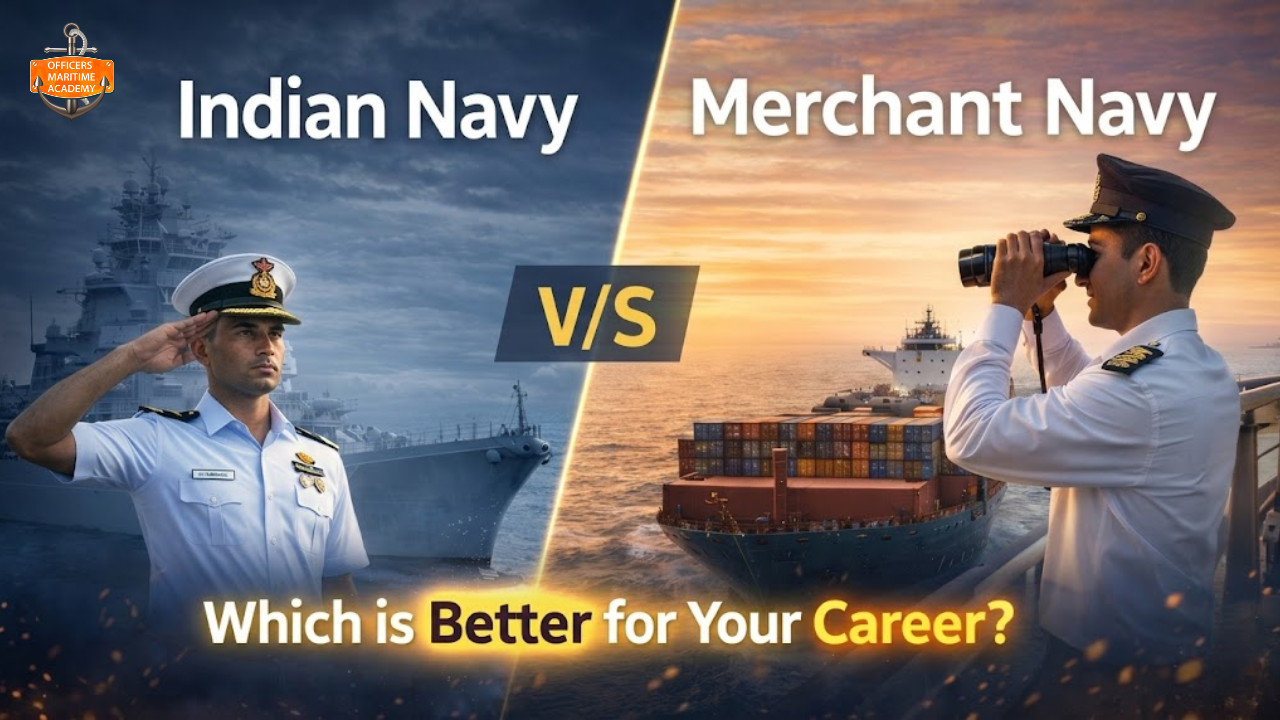
Indian Navy V/S Merchant Navy
Indian Navy V/S Merchant Navy: Which is Better for Your Career?
Indian Navy V/S Merchant Navy: Which is Better for Your Career? When I talk to young aspirants at our institute,
When I talk to young aspirants at our institute, alot of them ask me one big question. They are totally confused about which path to choose for their life at sea. People outside this field often mistake the two and think they are exactly the same thing. But to be very honest, that is far from the truth. In this complete guide, we are going to dive deep into Indian Navy V/S Merchant Navy to see which one actually suits your dreams.
The primary difference is that the Indian Navy is a military force protecting national security, while the Merchant Navy is a commercial service focusing on global cargo transportation. The Indian Navy is government-run with structured, lifetime employment, whereas the Merchant Navy consists of private/commercial shipping with higher, often tax-free, income potential.
Both of these fields offer amazing adventures, but their daily life, salaries, and goals are totally different. Let’s break down the difference between indian navy and merchant navy like two friends chatting over coffee, so you can make the best choice for your future.
To kick things off, we need to look at the base level of what these two massive organizations do.
The primary difference is that the Indian Navy is a military force protecting national security, while the Merchant Navy is a commercial service focusing on global cargo transportation. The Indian Navy is government-run with structured, lifetime employment, whereas the Merchant Navy consists of private/commercial shipping with higher, often tax-free, income potential. (Source: Prepp)
Its important to know that careers in indian navy vs merchant navy attract different mindsets. If you want extreme wealth and travel, you look one way. If you want medals on your chest and the pride of defending your borders, you look the other way.
Let’s clear the biggest confusion right now regarding indian navy jobs vs merchant navy jobs.
While making a lot of money is a big reason why youth join indian navy or merchant navy (specifically the merchant side), wearing the white uniform of the defense forces is all about respect, absolute honor, and the deep desire to serve the motherland.
Let’s look at the Key Differences Between Merchant Navy vs. Indian Navy:
Risks: Indian Navy officers face physical danger from armed conflict, piracy, or war. Merchant Navy risks are generally associated with accidents, technical failures, or piracy at sea.
| Feature | Merchant Navy Officer | Indian Navy Officer |
| Starting Salary | ₹1.5 Lakhs to ₹2 Lakhs / month (Tax-free mostly) | ₹70,000 to ₹80,000 / month |
| Peak Salary (Captain/Chief) | ₹8 Lakhs to ₹12 Lakhs / month | ₹2 Lakhs to ₹2.5 Lakhs / month |
| Time to Captain | Fast track: 10 to 12 years | Around 20-25 years to reach top ranks |
| Pension & Security | No pension. Contract-based work. | Lifetime pension, 100% job security. |
| Other Perks | Global travel, long uninterrupted holidays. | Military clubs, free medical for family, Canteen. |
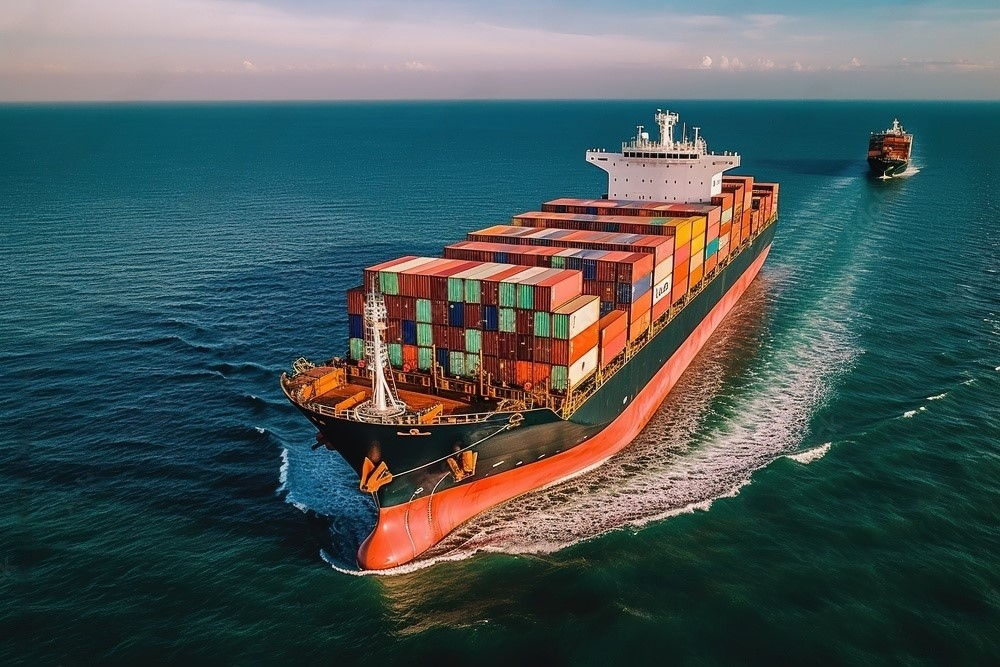
If you want to sail on giant cargo ships and earn that massive salary, you mainly have to focus on clearing the IMU CET (Indian Maritime University Common Entrance Test) and passing the strict DG Shipping medicals.
Merchant Navy Eligibility Criteria
Let’s look at the basic requirements if you are a 12th pass indian navy or merchant navy aspirant looking at the commercial side.
| Criteria | Merchant Navy Details (Deck & Engine Cadets) |
| Educational Qualification | You must have passed 12th standard with Physics, Chemistry, and Mathematics (PCM). You need a minimum of 60% aggregate in PCM and at least 50% marks in English in 10th or 12th. |
| Age Limit | The age limit indian navy merchant navy compares here is a bit relaxed. You must be between 17 to 25 years of age. (Age relaxation is there for SC/ST candidates). |
| Marital Status | Unmarried male and female candidates can apply. |
| Medical Standards | You must be physically fit for sea service. Eyesight must be 6/6 for Deck Cadets (without glasses). Engine Cadets can have up to +/- 2.5 vision. Strict Rule: Absolutely NO color blindness is allowed. |
Merchant Navy Syllabus (IMU CET Exam)
The IMU CET is an online computer-based test. It lasts for 3 hours and has 200 multiple-choice questions. The best part? There is no negative marking!
Here is what you need to study:
Physics (50 Questions): Based on your 11th and 12th NCERT books. Focus heavily on Mechanics, Thermodynamics, Optics, and Electromagnetism.
Mathematics (50 Questions): Calculus, Algebra, Vector 3D, and Probability are very important.
Chemistry (20 Questions): Basic physical and organic chemistry from your 12th standard.
English (40 Questions): Grammar, vocabulary, reading comprehension, and synonyms/antonyms. Good English is very crucial here!
General Aptitude (40 Questions): Basic logical reasoning, data interpretation, and general knowledge.
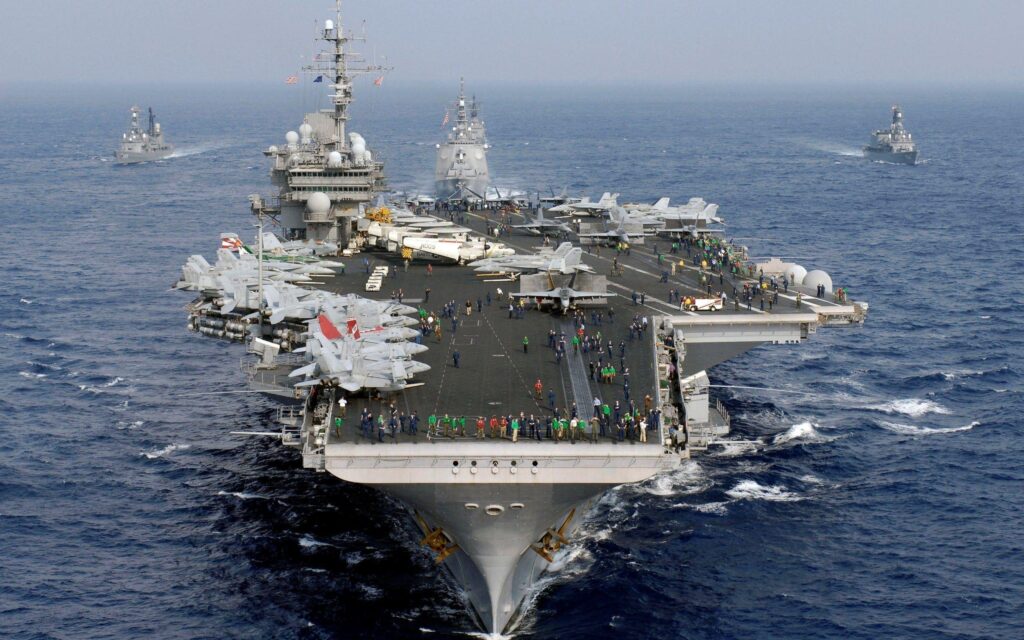
Now, if you want to wear the prestigious white uniform and serve the nation, the path is much more strict. Most students try to join through the National Defence Academy (NDA) exam or the 10+2 B.Tech Cadet Entry Scheme.
Indian Navy Eligibility Criteria
The defense forces do not compromise on age or physical fitness. Here is the strict merchant navy requirements india vs navy comparison.
Criteria | Indian Navy Details (NDA / B.Tech Cadet Entry) |
Educational Qualification | For NDA (Navy wing) and B.Tech Entry, you must pass 12th class with Physics, Chemistry, and Mathematics. (For B.Tech entry specifically, you need at least 70% in PCM and a valid JEE Main score!). |
Age Limit | The age limit indian navy merchant navy gap is huge. For the Indian Navy, you must be between 16.5 to 19.5 years of age. You have a very short window to apply! |
Marital Status | Only unmarried male and female candidates are eligible. You cannot marry until your training is complete. |
Medical Standards | Extreme military standards. Eyesight must be 6/6 or 6/9 correctable to 6/6. No knock-knees, flat feet, or pigeon chest. Tattoos are only allowed on specific parts of the inner arm. |
Indian Navy Syllabus (NDA Exam)
The NDA exam is conducted offline by UPSC twice a year. It is divided into two massive papers on the same day. There is strict negative marking (1/3rd of the marks are deducted for wrong answers).
Paper 1: Mathematics (300 Marks – 2.5 Hours)
Paper 2: General Ability Test or GAT (600 Marks – 2.5 Hours)
This paper tests everything else!
Whenever someone asks me navy vs merchant navy which is better, I always tell them to look at the competition first.
The Merchant Navy is very popular. There are around 50,000 ships globally, and every single ship needs a captain and a chief engineer. Every year, roughly 50,000 students give entrance exams, and about 4-5% get selected into top maritime colleges. The chances of making a good career here are quite high if you are dedicated.
On the other hand, the Indian Navy is one of the most elite and prestigious organizations in our country. Around 800,000 (8 Lakh!) students give the NDA written exam every year. Out of them, only about 10,000 clear it. Then they face the deadly SSB interview. After SSB, only 500 are left. Then comes the extreme medical test, and finally, only about 400 make it.
The selection rate for defense is just 0.05%! You need insane passion and fire in your belly to crack this.
Whether you want to join indian navy or merchant navy, you can’t just walk in. You need solid preparation.
How to Prepare for Merchant Navy?
If you want to sail the globe on commercial ships and earn that massive tax-free salary, your preparation has to be very targeted. Here is what you will face:
If your heart beats for the country and you want to wear the glorious white uniform, the path is much tougher. The selection rate is extremely low, so your preparation has to be flawless.
Preparing for either of these fields is a huge task, but you don’t have to do it alone. If you are leaning towards the commercial side, our team at Merchant Navy Coach in Dehradun is here to guide you. We provide the best IMUCET preparation and interview training at a very affordable price, ensuring you are 100% ready for the written, psychometric, and sponsorship rounds.
Lets weight the merchant navy pros cons vs indian navy.
Advantages of Merchant Navy
Disadvantages of Merchant Navy
Advantages of Indian Navy
Disadvantages of Indian Navy
After reading all this difference between indian navy and merchant navy, you might still be scratching your head.
Which is Better?
Some people argue they should not even be compared because they are so different. But if I had to personally choose for pure adventure and serving the flag, I would say the Indian Navy has a special magic. But if you want to become a millionaire by age 30 and see the world, the Merchant side is unbeatable.
In the end, the Indian Navy V/S Merchant Navy debate comes down to what you want from your life. Do you want the massive merchant navy salary vs indian navy officer pay? Or do you want the permanent respect of the defense forces?
Whatever you choose, it requires hard work, PCM knowledge, and cracking tough exams. You cannot do it alone. You need the right guidance to clear IMUCET or defense interviews.
That is where we come in! At Merchant Navy Coach, we are proud to be a leading best Merchant navy coaching in Dehradun. We provide top-notch study materials, expert faculties, and mock tests to help you clear these exams smoothly. And don’t worry, we keep our fee structures at a very affordable price so that every student can achieve their dream of conquering the oceans. Give us a call today and let’s start your journey.
1.What is the core difference in Indian Navy V/S Merchant Navy?
The main difference is that the Indian Navy is the government’s military force that protects the country’s sea borders, whereas the Merchant Navy is a private commercial industry that transports cargo for profit globally.
2.Who gets paid more, indian navy officer salary compared to merchant navy?
The Merchant Navy pays significantly more. A seasoned Captain in the Merchant Navy can earn between ₹8 to ₹12 Lakhs per month, while a Captain in the Indian Navy earns around ₹2 to ₹2.5 Lakhs.
3.What is the age limit indian navy merchant navy?
For the Indian Navy through NDA, the age limit is usually 16.5 to 19.5 years. For the Merchant Navy, you can join between 17 to 25 years of age depending on the course you are applying for.
4.I am a 12th pass indian navy or merchant navy aspirant, which is easier to join?
Statistically, the Merchant Navy is easier to join because there are more commercial ships globally and private colleges. The Indian Navy has a selection rate of just 0.05%, making it extremely tough to crack.
5.How is family life in indian navy postings vs merchant navy voyages?
In the Indian Navy, families can live with officers on secure naval bases with great facilities. In the Merchant Navy, the officer sails alone for 4-9 months while the family stays back at home, but the officer gets long, uninterrupted vacations afterward.
6.Can I switch from Merchant Navy to Indian Navy?
It is very rare and difficult due to the strict age limits and different training requirements of the defense forces, though the Indian Navy sometimes takes lateral entries for engineering roles, it’s not a standard path.
7.Where can I get the best coaching for IMUCET in Dehradun?
If you want to clear your maritime exams, Merchant Navy Coach is your best choice. We offer expert guidance at an affordable price right here in Dehradun.
Indian Navy V/S Merchant Navy: Which is Better for Your Career? When I talk to young aspirants at our institute,